Why You Feel Emotionally Numb After Religious Trauma (& How to Heal)
When you stepped away from a high-control church or other spiritual group, you expected to feel a sense of freedom, relief, or maybe even some grief.
In reality though? You feel flat, detached, and blank.
If this sounds familiar, I want you to know how common it is to experience emotional numbness after experience religious trauma. It’s your body’s natural protection mechanism it built to keep you safe in an environment where feeling your emotions weren’t safe to feel.
What Causes Emotional Numbness After Religious Trauma?
If you’ve spent time in a high-control religious environment, emotional distance may have been weaponized against you. You might have been told you had a "hardened heart,” or were harboring "hidden bitterness."
What was actually going on though was much more nuanced.
From a nervous system perspective, emotional numbness is simply the freeze response (or dorsal vagal shutdown). When your brain perceives a situation as overwhelming or unsafe, and running away or fighting back isn't an option, your brain shuts all emotions down.
The result? Numbness that doesn’t go away the moment you finally leave the high-control group you were in.
How High-Control Religion Triggers the Nervous System Freeze Response
1. You’re taught your intuition is "sinful"
When you grow up hearing that "the heart is deceitful above all things," you learn that your internal signals like gut feelings and discomfort, can’t be trusted. To survive, you learned to ignore those internal cues so no one could accuse you of sinning.
2. "Negative" emotions carry a high social cost
In high control religious and spiritual environments, “big” emotions are dangerous:
Anger gets labeled as rebellion and pride
Sadness or grief get framed as a lack of faith, gratitude, or trust in God or your spiritual leader
Doubt is treated as threat to the harmony of your religious or spiritual group
And because expressing any of these emotions risked exposing you to public shame, loss of community, or other consequences, you’ve learned that the safest emotion to have is no emotion at all.
3. The pressure to perform joy
High-control groups often demand forced optimism, which is just toxic positivity wrapped in spiritual language. When you’re forced to perform joy while suppressing your actual distress, it can lead to emotional numbness as well.
Why Talk Therapy Doesn't Always Unfreeze Religious Trauma
So why do you still feel numb even after you’ve left your high-control religion and deconstructed?
Because trauma doesn’t just live in your thoughts. It lives in the nervous system too.
Your prefrontal cortex (the area responsible for thinking) knows you’re no longer in that church, family system, or high-control group. But your body hasn't gotten the memo yet and it’s still preparing for the worst.
This is why traditional talk therapy doesn’t always help with recovering from religious trauma. Modalities like Brainspotting and IFS (Internal Family Systems) work with the subcortical region of your brain, which helps your nervous system realize that the threats has passed.
Somatic Practices to Unfreeze Your Body After Leaving Religion
Unlocking emotional numbness isn’t going to happen overnight. Instead, you might consider giving yourself opportunities to intentionally connect with yourself and your feelings (including the numbness).
Here are some starting places if you’re looking for some inspiration:
Compliment the numbness: Instead of getting angry at your numbness, thank it. It protected you when you didn't have other choices that were realistic for your context.
Track physical sensations, not just emotions: Start small. Is your stomach tight? Are your shoulders up by your ears? Notice physical signals without forcing yourself to find meaning in them.
Give yourself permission to notice your preferences: Reclaiming intuition starts with low-stakes choices like, what coffee you actually enjoy, what music sounds pleasant to you, or when you want to say "no" to a small request.
Ready to work through your religious trauma?
Healing from religious trauma isn't about finding a new set of rigid rules to follow. I support clients in Longmont, Boulder, Denver, and across all of Colorado through online religious trauma therapy.
Together, we’ll use a combination of Brainspotting and Parts Work to support you with getting out of functional freeze related to your religious trauma and rebuild your intuition.
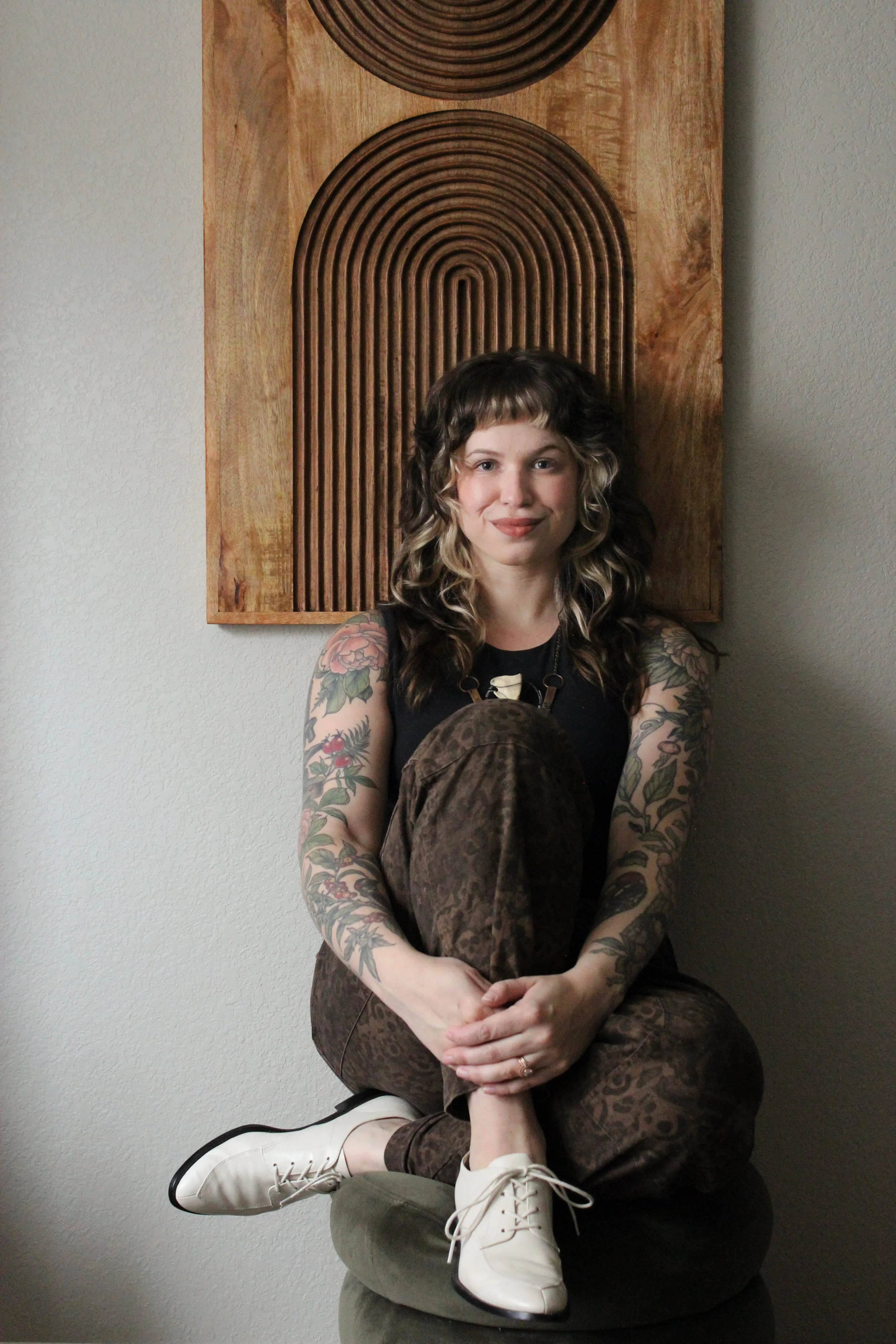
Hey there! I’m Halle, a religious trauma therapist based in Colorado.
I help people navigating deconstruction trade religious guilt and emotional numbness for internal safety and self-trust.