
Online RELIGIOUS TRAUMA Therapy IN Denver, COLORADO
For those who’ve physically left their church, but still feel mentally trapped in the pews.
The effects of religious trauma and spiritual abuse can linger long after you’ve left. Even after you’ve deconstructed, you sometimes find yourself thinking in line with the old rules you consciously rejected. This leaves your mind looping in circles while your body locks up with anxiety or guilt.
Whether you're in Denver or elsewhere in Colorado, we’ll use body-based therapies like Brainspotting and parts work to identify how outdated religious messages continue to affect you. You’ll also learn to recognize how your old conditioning might be overriding your own needs, wants, and desires so you can give yourself permission to live life on your own terms.
I offer online religious trauma therapy for adults in Denver and throughout Colorado

Why Is Religious Deconstruction So Challenging?
Intellectually, you know it’s not your fault that your church or spiritual community hurt you. Your nervous system just hasn’t received the memo yet.
You don't need a therapist to tell you that high-control religious and spiritual spaces cause deep harm. You’ve already lived that reality. What you may need a therapist for though, is help with the emotional cleanup that comes after leaving.
While you’ve been doing your own work to deconstruct, you might feel anxious about how intensely your body is resisting the very freedom your mind has chosen. Your chest tightens when you even think about voicing a boundary, and you still dread the risk of eternal punishment.
These are physical reminders that you were trained to hand over your autonomy in exchange for the illusion of acceptance.
Common Signs of Religious Trauma in High-Functioning Overthinkers
-

Feeling angry that your former religious and spiritual leaders lied to you
-
Experiencing anxiety and fear about doing (or even thinking) the wrong things
-
Grieving the loss of your community and built-in support network
-
Feeling shame about your gender identity, sexual orientation, and even your racial identity
-
Feeling guilty for “betraying” your family and culture by leaving
-
Wanting to reclaim your spirituality, but feeling afraid you’ll get hurt again

Therapy for Religious Trauma Helps You Deconstruct So You Can Reclaim Your Autonomy
High-control communities demand unquestioning loyalty. Now, it’s time to be loyal to yourself.
When you’re taught from day one that you’re inherently broken, your default survival strategy is to become small, compliant, and hypervigilant. You did whatever it took to be seen as "good" by the people you trusted, even if it meant overriding your own boundaries.
It’s exhausting to realize that while you’ve intellectually moved on, your body is still holding onto the anxiety, anger, and confusion left behind by those experiencees.
In therapy, we don’t just rehash the doctrine you were exposed to. Using Brainspotting and Parts Work, we'll work through the emotional and physical impact of those experiences, help you reclaim the spiritual practices you actually want to keep, and loosen the grip of the harmful messaging that still loops in your mind.
How to Start Religious Trauma Therapy in Denver
-

Book Your Consult
We'll spend 20 minutes discussing what you’re wanting to work on and whether working together feels like a good fit.
-

Your First Session
We'll explore how religious trauma is showing up in your life now and what you'd like to feel or experience differently.
-

Get a Custom Plan
Based on what we discuss, I'll put together a roadmap for working through the aftermath of religious trauma.
-

Rewire & Reclaim
We'll meet weekly to process your religious trauma and help you reconnect with your own needs and sense of autonomy.




Here’s what to expect during your online therapy sessions:
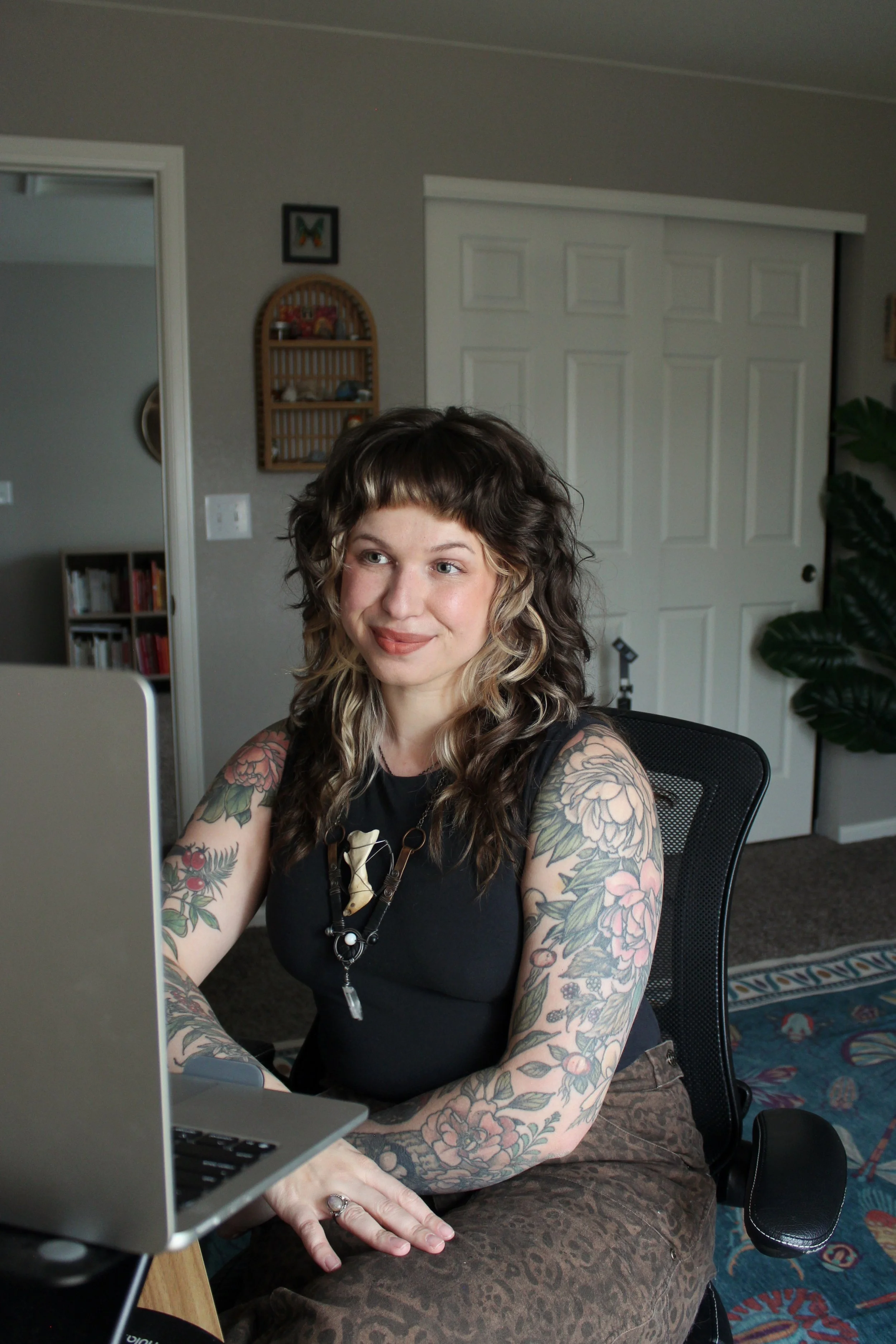
I’ll join our video session with a minimum of 2 drinks in hand (one Stanley full of ice water and a mug of whatever herbal tea I’m currently obsessed with).
Instead of leaving you wondering what we’re going to talk about, if you’ll have enough to say, and if you can *really* share about the things you said, did, or believed to fit into your former religious community or spiritual group, we’ll start every session with a recap of the previous one and mapping out what we’ll work on next.
You don’t have to worry about doing therapy “wrong” here.
My service dog (Odin) will likely make a cameo during our session too (and if you hear him snoring…sorry in advance).
My Approach to Online Therapy for Religious Trauma and Spiritual Abuse
The aftermath of leaving a high-control group can be noticed both in the way you think, and in the physical sensations you feel in your body. My practice goes beyond standard talk therapy. By integrating deep somatic and brain-body modalities you have the opportunity to process your experiences without having to find the perfect words for them.
Brainspotting for Non-Verbally Processing Trauma
If you’re an overthinker, you might put pressure on yourself to perform in therapy or otherwise “win” the session. Instead of relying on talking alone, Brainspotting offers another way to work with difficult experiences by using specific eye positions to help you access and process emotional and physical responses that can be difficult to put into words.
Spiritual Exploration That’s 100% Optional
As an ex-Catholic who narrowly avoided some New Religious Movements after leaving the Catholic Church, I understand how challenging it can feel to reclaim your spiritual life.
If you want spirituality to remain part of your life, but you're afraid of slipping into a new set of dogmas, we'll work together to make sure your choices remain your own.
Whether your path leads to a reconstructed spiritual life or a completely secular existence, your agency and autonomy come first. There's no pressure to adopt another belief system, follow another guide, or reclaim practices that no longer feel right to you.
Internal Family Systems (aka Parts Work) for Self-Understanding
In high-control environments, you might have learned to be perfect, hyper-productive, or overly accommodating to stay safe. Rather than judging these patterns, Parts Work helps us understand the protective roles they developed to play.
Together, we'll help these parts recognize that they no longer need to work so hard to keep you safe, so you can respond to your life from a place of greater choice rather than old survival strategies

Here’s what one of my colleagues wants you to know about me
“Halle really knows how to create a space where you can move through self-doubt and start stepping into a version of healing that feels real, grounded, and actually possible. ”
– Geri Lopez, LPC
Therapy for Religious Trauma and Spiritual Abuse Helps You:

…of leaving, losing your community, and recognizing just how much harm you endured.

…and trust your own memory and reality. What you experienced wasn't okay, and you're allowed to acknowledge that.

…and discover how much freer life can feel when you're no longer making decisions around the fear of being punished.

Another colleague thinks this is important for you to know too
“Halle brings a unique blend of warmth and depth, helping clients work at the nervous system level to create real, lasting change. You feel supported, understood, and more connected to yourself in the process.”
– Sarah St. Martin, LCSW, RYT

Your Investment
$250 per session
Paid at the time of each session using your HSA/FSA, credit/debit card.
A note on self-pay therapy:
Paying for therapy directly affords you more privacy and more choices for how you get support for the religious trauma you’ve experienced in your life.
Instead of being given a mandatory diagnosis and cut off after the 10 sessions your insurance is willing to approve, self-pay therapy allows you to better understand yourself on (and in!) your own terms.

Weekly somatic therapy bridges the gap between what your mind knows and what your body feels.
You might be able to dissect the dynamics of your former high-control group perfectly and explain exactly why its teachings were harmful. But understanding what happened doesn't always stop your chest from tightening, your stomach from flipping, or your eyes from watering when a memory comes up.
Our weekly sessions give you space to process these responses, so your body can begin to catch up with what your mind already knows: you're no longer living under those rules, and you have the freedom to make choices for yourself.
FAQs About Therapy for Religious Trauma in Denver, Colorado
-
Yes! I provide online religious trauma therapy for adults located throughout all of Colorado.
-
Yes! I can provide a superbill for you to submit to your insurance company for possible out-of-network reimbursement. The amount reimbursed depends on your individual plan.
Because a superbill is a medical document, it requires a diagnosis. We can talk through what that means so you can make an informed decision about whether you'd like to use your out-of-network benefits.
-
I know weekly therapy isn't financially accessible for everyone. Because the work we do involves processing the aftermath of religious trauma, I believe consistency is important.
If my fee doesn't fit your budget, I'd rather see you find a therapist whose services you can access consistently than have therapy become another source of financial stress.
-
First things first, I'm sorry you've experienced harm in therapy.
I've worked with people who've had difficult experiences with therapists, including feeling dismissed, encountering distracted clinicians, or recognizing familiar tactics from their former religious or spiritual communities.
If you decide to try therapy again, I want you to know that I'm not here to tell you how to live your life. My role is to support you in figuring out what feels right for you.
-
I’ve supported people who’ve been involved with the following:
Catholicism
Evangelicalism
Seventh-Day Adventists
Jehovah’s Witnesses
Church of Jesus Christ of Latter Day Saints
Scientology
I also have experience supporting folks who’ve experienced spiritual abuse in online New Age communities or from self-proclaimed spiritual leaders/teachers/guides.
-
Then you don’t have to (it really is as simple as that). While my work can include supporting folks with decolonizing and reclaiming spiritual practices, it’s never required. Therapy is about supporting you with what you want for your life.
It’s time for you to live your life on your terms.
If you've read to the bottom of this page, you might be feeling a strange mix of validation and discomfort.
Validation because someone is finally acknowledging just how bad it was. And discomfort because, well, it really was that bad. If you're ready to talk about working through the religious trauma and spiritual abuse you've experienced, you're invited to book a consultation call.
It's a no-pressure conversation where you'll have time to ask questions, share what you're looking for, and decide whether working together feels like a good fit.