Last updated July 14, 2026
In case you’re already feeling overwhelmed, here’s where we’re going:
If talking about your experiences feels overwhelming or simply doesn't provide the relief you need, there are other ways to process anxiety. I’ll be walking you through three alternatives to talk therapy that prioritize your privacy and your brain’s natural healing ability:
Journaling: A private, low-pressure way to organize your thoughts and gain clarity without having to speak them aloud.
EFT Tapping: A body-based technique using acupressure points to physically release the "charge" of anxious emotions.
Brainspotting: A specialized therapy that uses your visual field to access and process deep-seated anxiety stored in the subcortical brain (aka the part of your brain responsible for processing emotions).
If you’ve ever wondered, “What can I do instead of talk therapy?” you’re not alone! The reality is, talk therapy isn’t for everyone. Let’s talk about a couple of alternatives to traditional talk therapy that can help you get the relief you’ve been looking for.
Why Traditional Talk Therapy Doesn't Work for Everyone
Most traditional counseling methods, like Cognitive Behavioral Therapy (CBT), are top-down approaches. In other words, they focus on the thinking brain (the neocortex) to change your thoughts, behaviors, and emotions. The idea is that if you can rationally reframe a negative thought, your anxiety will fade.
For highly self-aware overthinkers, top-down therapy can quickly turn into an intellectual exercise. You can analyze your past, perfectly articulate your triggers, and understand the logic of your anxiety, but still feel a physical wave of panic when a boundary gets crossed or when your anxiety gets activated.
This happens because trauma, deep-seated anxiety, and survival mechanisms are stored in the subcortical brain and the nervous system, which unfortunately don’t speak the language of logic or words. To heal these areas, you need bottom-up approaches, like Brainspotting. These therapies start with the sensations in the body and the deeper layers of the brain to release stuck stress, allowing the analytical mind to naturally quiet down.
Comparing Top-Down vs. Bottom-Up Therapy
| Top-Down Therapy (Traditional Talk) | Bottom-Up Therapy (Somatic/Alternative) |
|---|---|
| Targets the analytical neocortex using language, logic, and cognitive reframing. | Targets the subcortical brain and nervous system using body awareness and visual points. |
| Excellent for gaining intellectual insight and mapping out behavioral patterns. | Excellent for releasing physical trauma, chronic muscle tension, and deep emotional blocks. |
| Can lead to "intellectualizing" feelings rather than actually processing them. | Allows for deep emotional processing without requiring you to constantly rehash the story. |
Talking is one way of processing, but it’s not the only way, nor is it even the best way! Verbal processing gets a lot of attention though because it’s what most depictions of therapy look like in different forms of media. In my practice, folks who tell me they don’t like talking tend to feel that way for a few common reasons.
1) You don’t have the words to begin describing your experience.
If you grew up in a family where mental health wasn’t talked about, or where you simply weren’t “allowed” to have struggles (especially due to your culture’s beliefs and values around mental health), talking about your experiences can be a major challenge.
2) Talking to another person about what happened to you, or what you’re struggling with, leads to you feeling like you’re not in your body.
In other words, you dissociate, which is a common response to retelling or re-experiencing something distressing. But here’s the kicker. If you don’t have words to describe your experience, you might not even know that dissociating is something that happens for you!
Instead you might notice that you feel “weird” or “off” when you start to talk about what’s fueling your anxiety. And since those feelings tend to be pretty unpleasant, you might have built up an association over time that talking about your experiences is a no-go.
3) You’re worried you’ll be judged for what you do have to say.
Fear of judgment (and shame) are two of the biggest barriers to talking about your experiences. And these fears haven’t come out of nowhere!
You likely tried to talk to someone in the past about your experiences and their reaction told you that it wasn’t safe to open up. And from this experience, you either started to 1) overthink about what’s actually okay to share with people, or 2) learned to keep your experiences completely private.
It’s also possible that the home, culture, or religion you grew up in taught you that certain experiences are inherently shameful and therefore inappropriate to talk about. If that’s a message you received, it’s beyond understandable that you have worries and fears related to talking about your experiences.
Luckily, talk therapy isn’t the only way to get relief from anxiety.
Let’s take a look at three of my favorite alternatives that I tend to recommend on repeat.
Option #1: Journaling using therapist approved prompts can help you better understand your anxiety without having to talk to anyone about it.
Journaling using therapist-approved prompts can help you better understand your anxiety without having to talk to anyone about it. Better yet, journaling offers ultimate privacy. Whether you write in a physical notebook, a secure document on your computer, or the notes app on your phone, no one ever has to read what you write.
From a cognitive perspective, chronic overthinking traps thoughts in a continuous loop in your working memory. Journaling acts as an external release valve. By moving those racing thoughts out of your head and onto a page, you force your brain to slow down and process them.
I’m a fan of journaling because it allows you to be as brief or as detailed as you’d like. Even answering a prompt with a few bullet points allows you to start shifting your perspective. If you want to explore this alternative, check out my 5 Anxiety Journal Ideas for Overthinkers.
Option #2: A guided EFT tapping session can help you process your anxiety without talking too.
A guided EFT tapping session is a fantastic somatic alternative that can help you process anxiety without speaking a word. EFT involves using your fingertips to tap on specific acupressure meridian points on your body while gently focusing on the stressful or emotionally painful experiences you want relief from.
While traditional talk therapy focuses entirely on the mind, EFT Tapping works directly with the body's nervous system. Tapping these somatic points sends a physical calming signal to the amygdala—the brain's smoke detector and alarm system. It essentially tells your body, "You are safe right now," even while your mind is acknowledging a stressful thought.
This tapping for anxiety session led by Nicole.For.Real is a great starting place for those interested in tapping. While you may be prompted to repeat phrases from the tapping session aloud, tapping is just as effective if you simply listen along and tap
Option #3: If you don’t like talking, but want to work with a therapist, Brainspotting might be the therapy you’ve been looking for.
If you don’t like the idea of talking in circles, but still want the customized guidance of a licensed professional, Brainspotting might be the exact therapy you’ve been looking for.
Instead of the stereotypical, "So, tell me about your relationship with your mother," a Brainspotting therapist doesn't need to drag you through a lengthy rehash of your past to help you find relief today. Brainspotting operates on the core neurobiological principle that "where you look affects how you feel."
Because this modality utilizes your visual field to locate hidden emotional blocks, it bypasses the analytical, talkative part of your brain entirely. It accesses the deep subcortical brain where anxiety and trauma are physically stored, allowing your nervous system to naturally process and release deep-seated tension. It is an incredibly powerful tool for people who prefer not to share the agonizing, nitty-gritty details of their anxiety just to get some relief.
Looking for a therapist who provides alternatives to talk therapy?
I provide online therapy to adults who are based in either Colorado or Oregon. My entire practice is based around non-traditional approaches to therapy because I know that talking isn’t everyone’s primary processing style.
To get a better idea of what therapy with me looks like, read through my weekly therapy page.
If you’re located in another state, I recommend using Inclusive Therapists or Best Therapists to find a therapist licensed to practice in the state you live in.
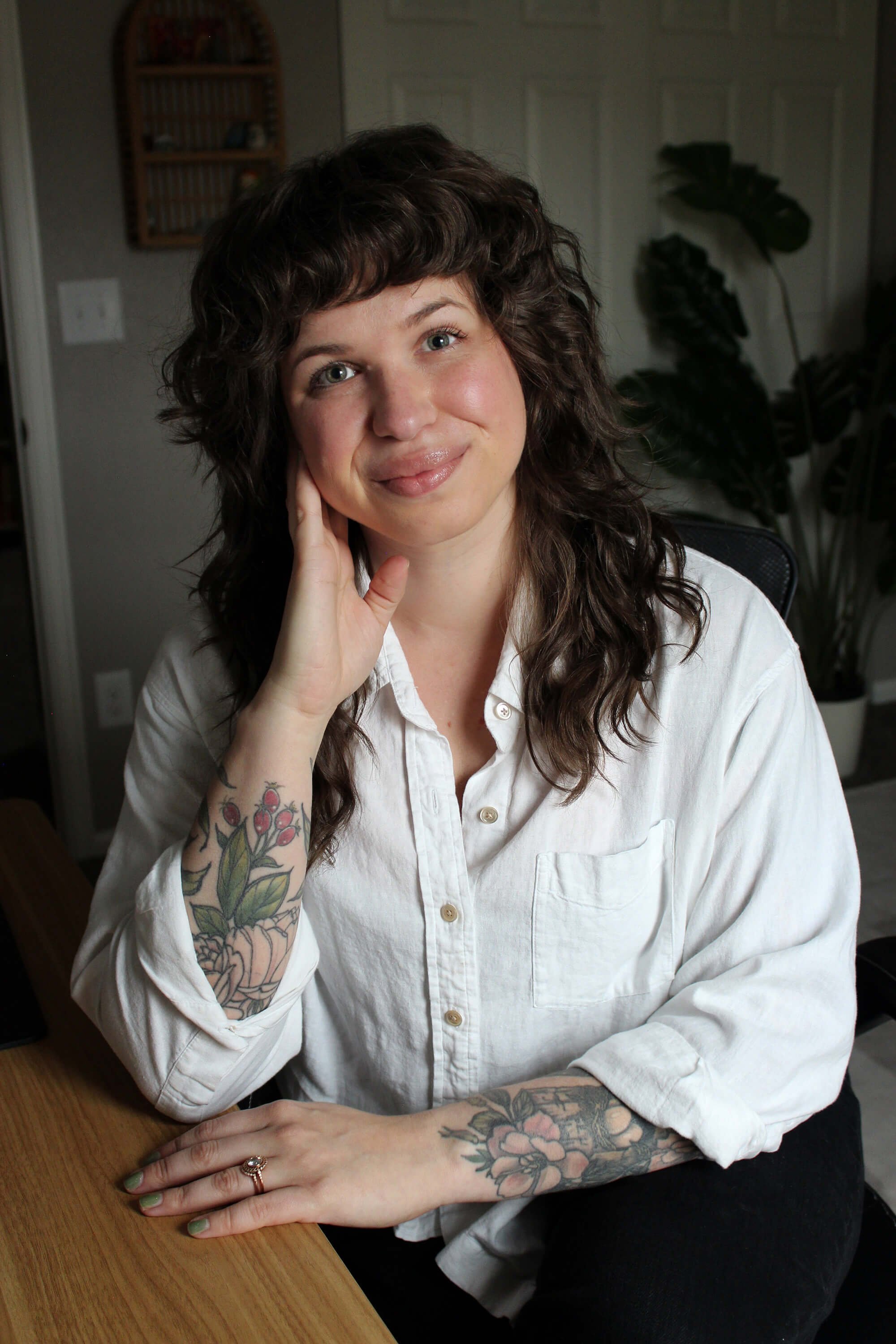
Hi! I’m Halle, an Anxiety Therapist in Colorado & Oregon.
I know you’ve already tried everything to get your anxiety under wraps. And I need you to know, it’s not your fault that you’re still struggling!
If you live in either Colorado or Oregon, I’d love to work with you in weekly therapy or in an intensive! Book your free intro call to get started!