Why You Can’t Just 'Stop Overthinking' (And What to Do Instead)
Last updated July 14, 2026.
A lot of the people I work with as a licensed therapist aren’t just “a little anxious.” They’re chronic overthinkers. And like my clients, just because you know the signs of overthinking and why you’re always overthinking doesn’t mean you know what to do about it. So let’s get practical!
The Nervous System Loop That Fuels Overthinking
If you’ve ever been told to "just stop overthinking things," you know exactly how frustrating that advice is. If you could turn off the cognitive background noise, you would have done it a long time ago.
From a clinical perspective, chronic overthinking is better known as rumination. When you navigate high-pressure environments, systemic stressors, or childhood dynamics where you had to anticipate everyone else's needs to avoid conflict, your nervous system learns to stay in a state of hypervigilance and rumination is part of that.
Your brain assumes that if it can just replay the conversation one more time, analyze every potential outcome, or perfectly plan, it’ll finally be safe enough to relax. But you can’t use the thinking brain (aka the neocortex) to talk the emotional brain (aka the subcortical brain) out of a fight-or-flight response.
Reflection vs. Rumination: Spotting the Difference
To break the cycle, you have to recognize when your brain has crossed the line from helpful problem-solving into anxious looping.
| Productive Reflection | Anxious Rumination |
|---|---|
| Focuses on solutions: You are actively looking for a way forward or a lesson learned. | Focuses on the problem: You are replaying the event on a loop without any new insights. |
| Has a natural endpoint: You reach a conclusion, make a decision, and move on. | Is open-ended and exhausting: It drains your energy and leaves you feeling more stuck. |
| Lowers emotional distress: Processing the thought brings a sense of relief or clarity. | Heightens physical anxiety: Your jaw tightens, your shoulders rise, and the panic grows. |
Intellectualizing Your Feelings Won't Heal Them
As an overthinker, you are likely very self-aware. You can probably trace your anxiety back to its roots, explain your triggers perfectly, and map out exactly why you feel the way you do.
The problem is that understanding your anxiety doesn't make it go away.
When you try to solve your stress entirely in your mind, you’re are intellectualizing our emotions, or using logic as a shield to avoid actually feeling the physical discomfort of anxiety in our bodies.
This is why traditional talk therapy can sometimes feel like running talking in circles for overthinkers. To actually interrupt the cycle, you have to drop out of the analytical brain and work at the nervous system level using somatic approaches like Brainspotting. But there are other tools that can support you as well.
Here are 5 therapist-approved ways to stop overthinking that you can start using right away:
1. Set aside “worry time” in your schedule.
Seriously! Block off 5-10 minutes on your calendar and set a reminder for yourself. When your designed “worry time” comes up, you can write out a worry list (or use voice-to-text if you’re using your phone or computer).
When your time is up, close your journal or close out your Notes app. The more you practice this, the more you train your brain to contain overthinking instead of letting it run your life all day long.
2. Move your body (but don’t overstimulate yourself).
Movement can provide relief, but it’s important to not stress your body out even further. When you’re overthinking, your nervous system is already activated.
So instead of intense workouts (like CrossFit or distance running), try low-stimulation movement like:
Yin yoga
Stretching
Qigong
Slow walking
Lower intensity movement can help you release some stress without spiking your heart rate any further.
3. Play the fun version of the “what-if” game.
Overthinking is basically your brain playing a very committed game of: “What’s the worst that could happen?” And while it might sound weird, this tells us that your overthinking mind is actually very creative. But what if you used that creativity to check out the other end of the spectrum?
Even if it doesn’t feel believable, start generating some ideas of all the ways things could go well. Like this:
“What if I actually find parking super close to the restaurant?”
“What if I end up hiring a virtual assistant who makes my business feel fun again?”
“What if I end up loving my new haircut?”
Or:
“What if I actually find parking right away?”
“What if this decision works out in my favor?”
“What if I end up liking this more than I thought?”
Bonus points if you notice how it feels to imagine these best-case scenarios coming to life. Even if you don’t fully believe these statements, you’re giving yourself an opportunity to practice mental flexibility, which helps reduce overthinking.
4. Reduce information overload.
Give yourself a break from doomscrolling. While it’s normal to want to stay informed, too much time engaging with online media can be overwhelming for your mind and body. I’m a big fan of Opal for reducing screen time and setting a schedule for when certain apps are available on your phone.
5. Lower your sensory input to calm your mind.
It’s easy to forget that we’re constantly taking in information from our senses too. Sometimes overthinking is a byproduct of sensory overload. So dim the lights, change into a comfortable outfit, and put on some noise cancelling headphones to see if reducing sensory input is supportive for you. This can help your brain stop scanning for more input, which can also reduce overthinking.
Bonus Tip: Reach out to me for Anxiety Therapy if you live in Colorado or Oregon.
If you’re located in either Colorado or Oregon, you can reach out to me for a free consultation call for 1:1 therapy! One of the best part of 1:1 support is that we can get hyper-specific about which tools will be most effective for you. We can also use powerful methods like Brainspotting to process the root causes of your overthinking too.
If you’re located in another state, I recommend using Psychology Today or Inclusive Therapists to find a therapist licensed to practice in the state you live in.
TL;DR
Overthinking doesn’t have to be your norm. Between reducing how much information you take in (including sensory information), gently moving your body, and strategically processing your worries, relief is possible!
And of course, if you want customized support so you can stop overthinking, therapy for overthinking is available too!
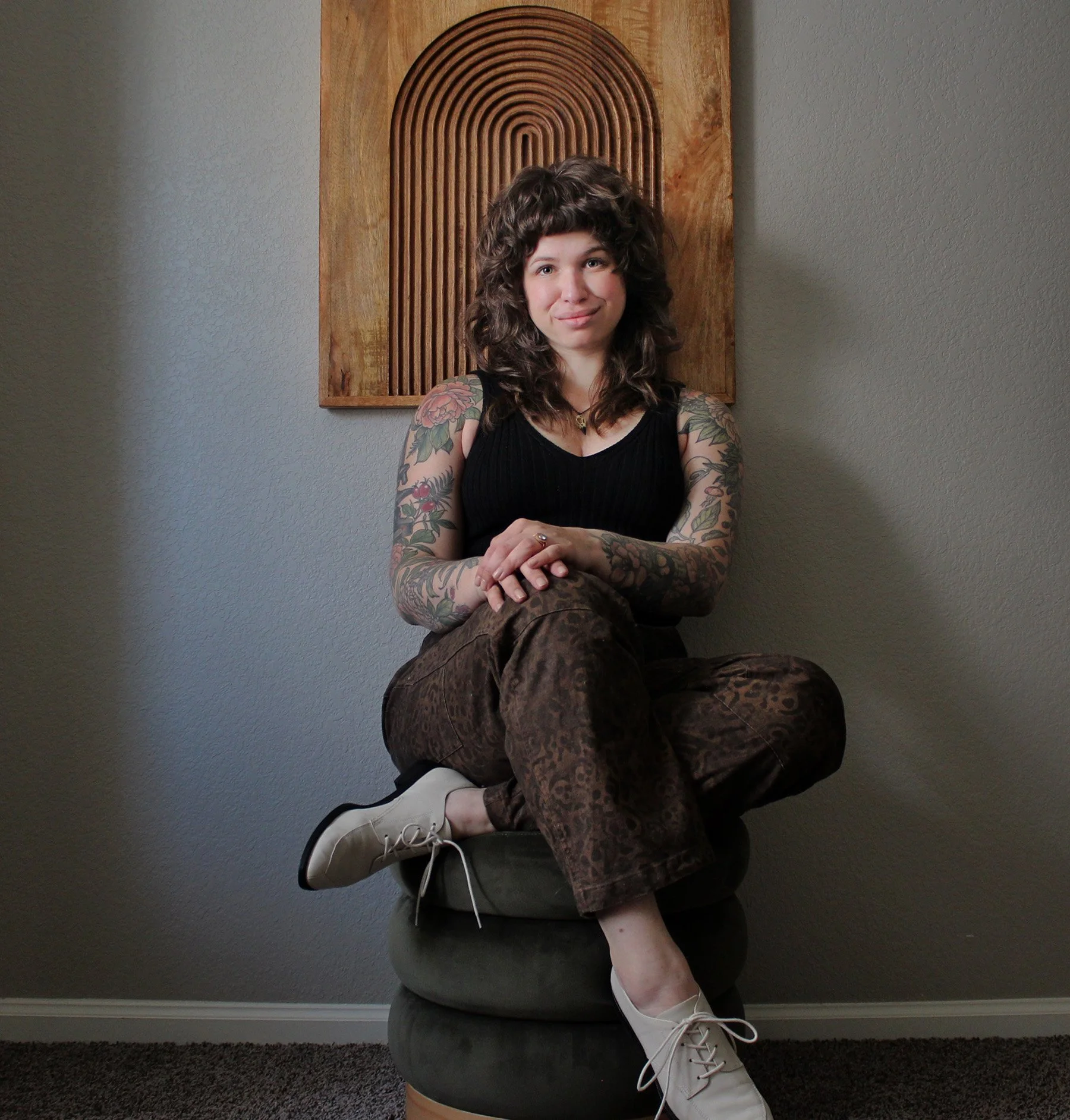
Hi! I’m Halle, an Anxiety Therapist in Colorado.
I work with anxious adults who overthink every decision they make out of fear of making a mistake.
If you live in either Colorado or Oregon, I’d love to work with you in weekly therapy or in an intensive! Book your free intro call to get started!