5 Signs It’s Time to Try Holistic Treatment for Anxiety
Let’s go ahead and cut to the chase: anxiety isn’t a personal failing. If you’re tired of therapy that leaves you feeling even worse about yourself, here are some signs it’s time to look into holistic treatment for anxiety.
Sign 1: You want to stop blaming yourself for being so anxious.
One of the top complaints I hear from people who’ve tried Cognitive Behavioral Therapy in the past is that it prompted them to feel more guilt and shame. And that’s no surprise! Being handed a worksheet with the Top 10 List of Thinking Errors doesn’t exactly lend itself to feeling good about yourself.
You might not believe this, but I actually think you can trust yourself more than you give yourself credit for. This is something I support folks with in 1:1 weekly therapy sessions so that you can interrupt the cycle of self-blame on a regular basis.
Sign 2: You want your therapist to give you more than just a worksheet to help with your anxiety symptoms.
Speaking of worksheets, holistic treatment for anxiety goes beyond the handouts so that you can have a diverse toolkit at hand. This might look like:
Sample scripts for how to advocate for yourself in social settings where you tend to get anxious
Role playing specific social scenarios in session so you can practice using new language
Movement practices that help you process the physical sensations of anxiety
Body-based methods like Brainspotting that allow you to get relief without even needing to speak
Tips for crafting rituals informed by your spiritual and cultural practices that help to reduce your anxiety
Contrary to popular belief, therapy isn’t just about diving into your past. It’s my own belief that therapy need to support you in your day-to-day life and goals for the future. So of course, holistic anxiety therapy has a heavy focus on giving you tools and practices you can start using right away to see if they’re the right fit for you.
Sign 3: You want your spiritual life to be included in your anxiety toolkit.
Spirituality often gets neglected in therapy. But if this is a major part of your life, you need a therapist who can make sure your spiritual practices are included in your care. And if your spiritual practices aren’t part of what mainstream society thinks of as “standard” you shouldn’t have to worry about your therapist discriminating against you.
A primary focus in my own practice is to look at the intersection of anxiety and spirituality. When we look at how these two overlap, we’re often able to find ways that spirituality can enhance the work we’re doing in therapy, which also tends to help you feel even more fulfilled by your spiritual life. It’s a win-win!
Sign 4: You want your cultural practices to be centered in therapy.
Your culture matters. Whether you’re already connected, or working on reconnection, your cultural background and practices should be acknowledged, honored, and centered in therapy.
This also includes acknowledging and honoring your experiences and history related to displacement and migration. If your ancestors, like mine, were stolen from their homelands, or were forced to flee in hopes of a safer future, then we need to be talking about how your ancestors’ relationships to anxiety influence your own relationship to anxiety.
And if your ancestors lost certain practices due to assimilation and you want to reclaim those practices for yourself, that should be included in therapy as well.
Sign 5: You want a therapist who can connect you with additional resources that will help with your anxiety.
In my practice, it’s common for me to refer clients to doctors (both allopathic and naturopathic), acupuncturists, chiropractors, massage therapists, occupational therapists, private pilates instructors, and other health and wellness professionals.
Anxiety management goes beyond what happens in a therapy session and getting easily connected to other practitioners is one of the many benefits of working with a holistic anxiety therapist. My 1:1 clients are sometimes surprised when I ask if they’d like my support with identifying additional wellness practitioners to work with, but I see it as part of my role to identify where there may be gaps in your care. The more gaps we can close, the less likely you are to feel totally overrun by anxiety!
Looking for holistic treatment for anxiety in Longmont, Colorado (or elsewhere in the state)?
You’re in the right place! Click the button below to request a free (and no-pressure) consultation call (but only if you’re located in Colorado or Oregon–those are the only states I’m licensed to practice therapy in).
If you live somewhere other than Colorado or Oregon, you’ll need to run a search on ye olde Google for a therapist who’s licensed to practice where you live.
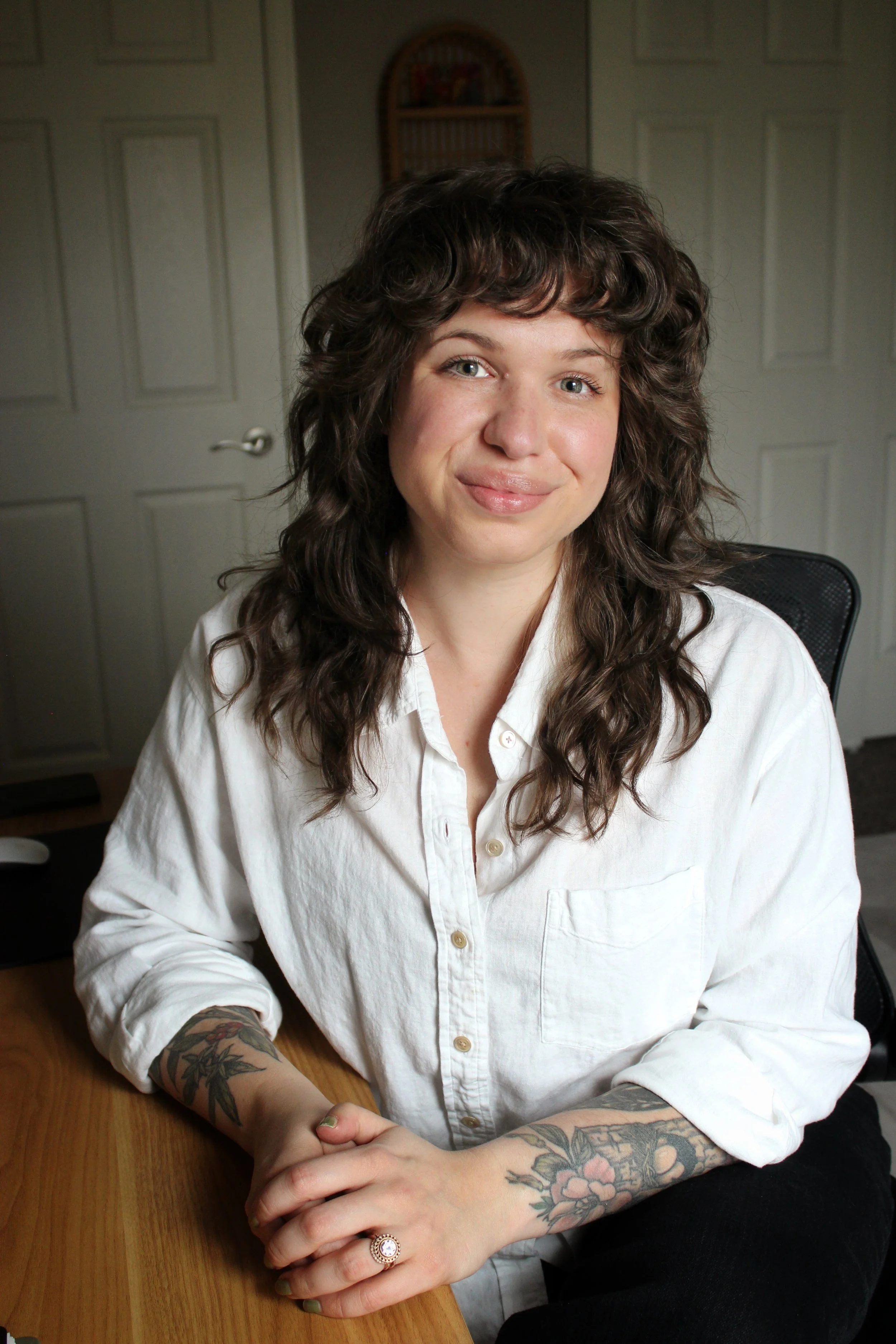
I’m Halle! An anxiety therapist based in Longmont, Colorado.
I work with adults who are ready for anxiety to stop running (and ruining!) their lives. You can work with me in either 1:1 weekly therapy, or in a therapy intensive.
If you live in either Colorado or Oregon, I’d love to work with you. Book your free intro call to get started!